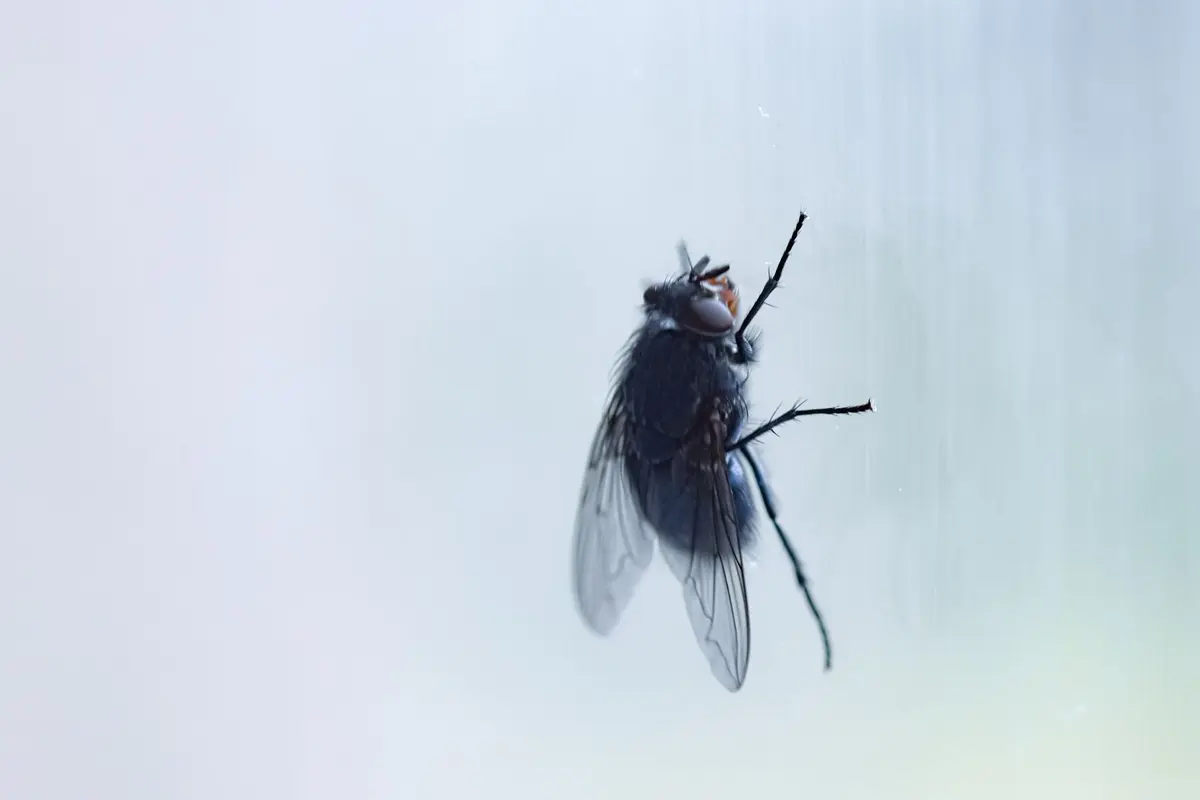
Cluster Flies: Why They Swarm Your Windows in the Fall
Seeing dozens of large, slow flies on your windowsills, especially on sunny days in October and November? They fly clumsily, end up on their backs and come back the next day even after you clean everything. They are very often cluster flies (also called attic flies). It is not a cleanliness problem: it is an entry-point problem.
How to recognize a cluster fly
- slightly larger than a house fly, about 8 to 10 mm;
- dark grey, with small golden hairs on the thorax;
- at rest, the wings overlap on the back;
- slow, buzzing flight, often near the sunniest windows.
Where do they come from?
In spring and summer, cluster fly larvae develop in the soil as parasites of earthworms. That is why homes surrounded by lawns, fields or wooded lots, common in Laval and on the North and South Shores, are often hit harder. In late summer, adults gather on warm south- and west-facing walls, then slip under siding, into soffits and the attic to spend the winter.
Why they show up indoors in fall and winter
Hidden in the walls and attic, they stay sluggish. As soon as a sunny day warms the wall or the heating comes on, they wake up and follow the light... to your windows. They do not breed inside the house: the ones you see got in at the end of summer.
Are they dangerous?
Unlike house flies, cluster flies do not feed on garbage in the home and are not known to spread disease. They do not bite. The nuisance is mainly their numbers, small spots on windows and walls, and sometimes an odour if many die in an attic or wall.
What to do if they are already inside
- Vacuum windows and sills, then empty the vacuum outside.
- Use sticky window traps in the most affected rooms.
- Do not spray insecticide indoors: the flies are hidden in the walls, and aerosol products leave useless residue. Foggers ("bug bombs") should never be used in a dwelling.
- Note where they come out (window frame, ceiling light, attic hatch): it is a valuable clue for the technician.
Prevention happens in late summer
For next year, the right time is late August and early September, before they gather:
- caulk around windows, doors and outdoor electrical boxes;
- cover attic and soffit vents with fine mesh;
- repair screens and check siding joints;
- for homes hit every year, a professional exterior perimeter treatment applied at the right time clearly reduces how many flies get in.
Need help?
Not sure they are cluster flies? Send us a photo or check our Identify a pest page. If they come back in large numbers every fall, our technicians can find the entry points and plan the treatment. ExtermZone serves Montreal, Laval, the North Shore and the South Shore: (514) 295-7696.