Why Do Cockroaches Keep Coming Back to My Apartment?
You wipe the counter every night, dishes never sit in the sink, and the garbage goes out daily. Yet when you flip on the kitchen light at 11 p.m., a small brown cockroach still darts behind the coffee maker. It is one of the most frustrating situations we see in Montreal plexes and apartment buildings, especially in November. The good news: it is almost never about cleanliness. The bad news: as long as only one unit gets treated, the problem comes back.
This article explains why, how cockroaches move through a building, what each person (tenant, landlord, property manager) should do, and the habits that make things worse.
"But my place is clean!": why that is not enough
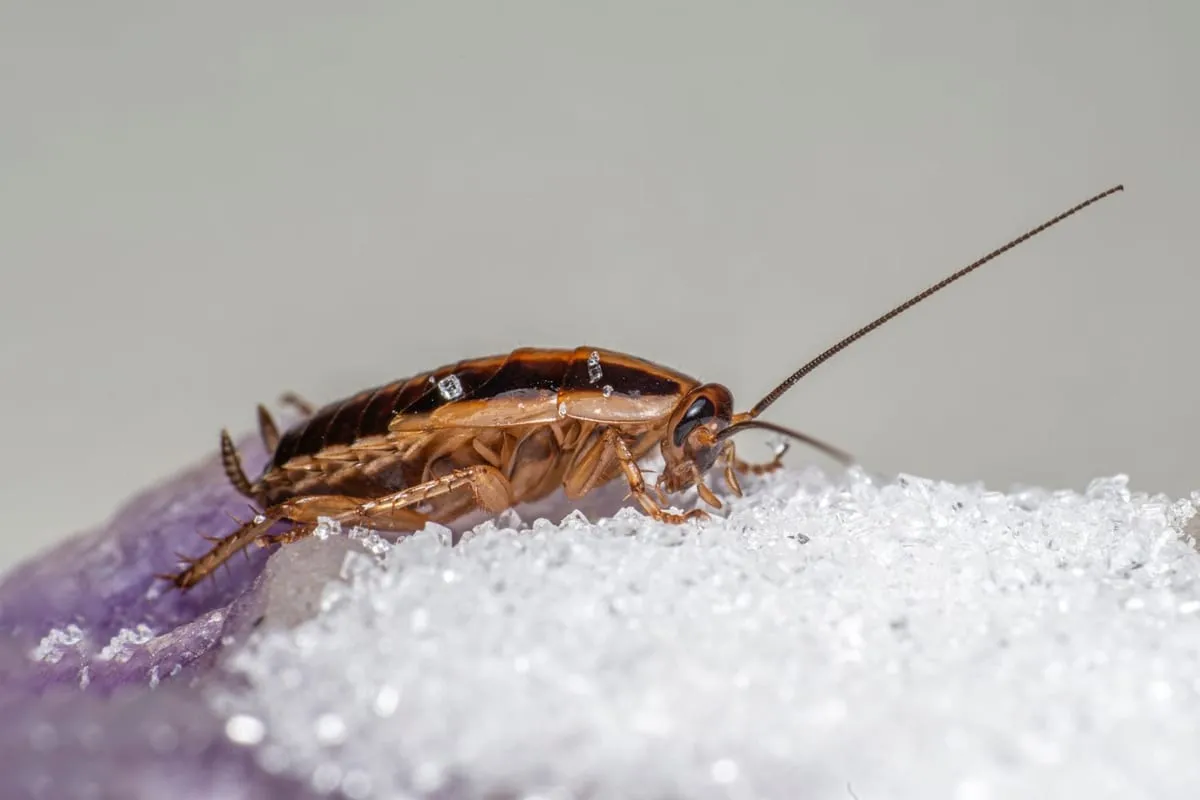
In apartment buildings around here, the species is almost always the German cockroach, a small roach about 1.5 cm long, light brown, with two dark stripes behind the head. It lives indoors all year and only needs three things: warmth, a little moisture and crumbs.
The catch is that a kitchen that looks clean still offers plenty:
- grease built up under the range hood and along the side of the stove;
- crumbs that fall between the stove and the counter, invisible unless you pull the appliance out;
- the drip pan and warm motor under the fridge;
- the glue in cardboard boxes, paper bags stored under the sink, the cat's food;
- condensation on the pipes under the sink and behind the dishwasher.
A German cockroach can survive several days on almost nothing. Cleaning lowers the population and makes treatment work better, but it does not wipe them out. Above all, it does not fix the real cause in a building: the roaches are coming from somewhere else.
How they move from one unit to the next
In a triplex on the Plateau, in Rosemont or in Verdun, kitchens are often stacked directly on top of each other. They share the same plumbing stack, the same party wall and sometimes the same ventilation duct. For a cockroach, that is a vertical highway.
The most common routes
- Around pipes: the hole in the wall under the sink is usually bigger than the pipe. Behind it is a void that runs up and down from floor to floor.
- Outlets and switches on shared walls: we sometimes find droppings (tiny black specks) inside the cover plate.
- Under baseboards and cabinets: the gap between the floor and the bottom of the cabinets often connects the kitchen to the wall cavities.
- Floor drains and the shared laundry room in the basement of larger buildings.
- Hallways: under entry doors with no door sweep, and through garbage chutes in buildings that have them.
When they move
Cockroaches relocate when their surroundings change: a neighbour getting their unit treated, an apartment emptied during a move, a vacant unit kept barely heated, renovations that open up walls. That is why so many tenants see them "all of a sudden" after years without any trouble. They did not change anything; the neighbourhood inside the building did.
Why you see more of them in November
Three things come together at this time of year in Montreal and Laval:
- The heat comes back on: baseboard heaters, radiators and dry air push cockroaches toward warm, humid spots, meaning the kitchen and bathroom.
- Windows stay closed and people cook at home more: more heat, steam and food smells in the kitchen.
- Cardboard piles up: Black Friday orders, grocery deliveries, boxes of holiday decorations brought out of storage. Corrugated cardboard makes perfect hiding spots and travels from unit to unit, and sometimes from a warehouse straight into your kitchen.
One simple habit for the season: break down boxes as soon as they arrive, put the cardboard in the recycling the same day, and never store it under the sink or behind the fridge.
Three typical situations
"I thought it was my dishwasher"
A typical example in a Villeray plex: roaches show up only near the dishwasher. You clean everything and replace the door gasket, with no change. In cases like this, the inspection often shows that the hole around the water supply line, behind the appliance, opens straight into the stack shared with the unit below. As long as that unit is not treated, the one above keeps getting roaches.
"We had it treated and it worked for three weeks"
A common scenario in a Longueuil sixplex: the owner has only the complaining unit treated. A few weeks later, the same tenant calls back. The neighbouring units, never inspected, kept producing roaches. The fix is the whole section: the unit, the one above, the one below and the ones on each side.
"I set off a bug bomb to be safe"
This is the most common mistake. More on it below.
Who does what in the building
The tenant
- Tell the landlord in writing (email or text), with the date and where you see them. A photo, even a blurry one, helps a lot.
- Do not hide the problem out of embarrassment: the longer you wait, the bigger the affected area.
- Give access for the inspection and treatment, and follow the preparation list you receive.
- Do not use store-bought products before or after the professional treatment without talking to the technician.
The landlord
- Get an inspection quickly: in Quebec, the landlord must keep the dwelling fit for habitation, and in Montreal the city's housing sanitation by-law also covers vermin. A tenant can contact 311 if nothing happens.
- Have the neighbouring units inspected, not only the one that complained, and give the access notices required by the Civil Code (generally at least 24 hours in advance).
- Seal the small openings around pipes and under cabinets once the treatment is done.
The property manager
- Keep a log: which unit, what date, what treatment, what result.
- Schedule visits in groups so the whole section is treated within the same period.
- Include vacant units and the garbage room, which are often forgotten.
Why neighbouring units must be treated
We often use the cross rule: when one unit is infested, we inspect at least the unit above, the unit below and the units on each side. In a plex, that often means the whole building. If only one unit is treated, the neighbours' roaches move back in as soon as the product wears off.
Inspecting does not mean blindly treating everything. A neighbouring unit with no signs may only get monitoring with sticky traps. A unit with signs gets a full treatment. This avoids unnecessary treatments and lets you follow progress floor by floor.
Mistakes that scatter cockroaches
Bug bombs (total release foggers)
They seem to cover everything, but the product mostly settles on visible surfaces. The roaches are inside walls, under appliances and in cracks. The product irritates them and drives them away… into the walls and the neighbouring units. The result: the problem moves and spreads. These products also carry a fire risk near pilot lights and electrical appliances. We never recommend them in apartments.
Spraying over baits
The gels and baits professionals use have to be eaten by the roaches. Spraying an insecticide or a cleaner over them makes them repellent, and they stop working.
Moving boxes "to get rid of them"
Carrying boxes, small appliances or a toaster from an infested unit to another place moves the eggs along with them. A female carries a capsule holding several dozen eggs.
Stopping monitoring too soon
Not seeing any for a week does not mean it is over. Eggs already laid hatch in the following weeks, which is why the second visit matters.
How to get rid of them for good: the method
- Inspect the section: the affected unit and its neighbours, with a flashlight and numbered sticky traps placed under the sink, behind the stove, near the fridge and in the bathroom.
- Prepare: empty the lower cabinets, pull out the stove and fridge if possible, get rid of cardboard, store food in sealed containers.
- Targeted treatment: gel baits in cracks, dusts in wall voids and around pipes, a growth regulator when needed, using products registered by Health Canada. No spraying everywhere.
- Second visit: a few weeks later, to reach the young that hatched and adjust based on the traps.
- Sealing and monitoring: plug small holes around pipes, install door sweeps, and leave a few traps in place to catch any return early.
Numbered traps are your best tool: if they stay empty for several weeks in a row across the section, the problem is truly solved. If they keep catching roaches in one unit only, you know exactly where to go back.
Myth or fact?
- "Cockroaches mean the place is dirty." Myth. In a building, a spotless unit can get them from its neighbours.
- "If I see one in daylight, there are a lot." Mostly true. They are nocturnal: seeing them in broad daylight often means their hiding spots are full.
- "Cold kills them, so I open the windows." Myth for a heated apartment: they retreat into walls and appliances, which stay warm.
- "One treatment is enough." Rarely. Eggs hold up better against products than adults do, hence the second visit.
Frequently asked questions about cockroaches in apartment buildings
My neighbour refuses access to their unit. What now?
It is up to the landlord to get access by giving notice according to the rules. The neighbouring tenant is required to allow necessary work. In the meantime, we reinforce the barrier on your side (sealing, baits at the entry points) and keep monitoring with traps.
Do I have to leave my apartment during treatment?
With gels and dusts placed in cracks, time away is usually short. The technician gives you the exact delay, especially if there are children, a pregnant person or pets.
How long before I stop seeing them?
You often see more roaches in the first few days, because the baits draw them out. Numbers should drop clearly in the following weeks, and the second visit finishes the job.
Can cockroaches come from the building next door, through the wall?
Yes. In rows of plexes built wall to wall, the shared wall can be a route. In that case, we include it in the inspection.
Need help in your building?
Whether you are a tenant, the owner of a duplex or the manager of several buildings, our certified technicians inspect the whole section and apply our targeted pest solutions, with a 6-month guarantee on cockroaches. ExtermZone serves Montreal, Laval, the North Shore and the South Shore, 24/7. Call us at (514) 295-7696.